




News and Updates!
South Africa’s Cannabis Crossroads: Why This High Court Case Could Change Everything
Apr
A Defining Moment for Cannabis in South Africa
On 13 April 2026, a major legal battle began unfolding in South Africa—one that could reshape the future of cannabis in the country.
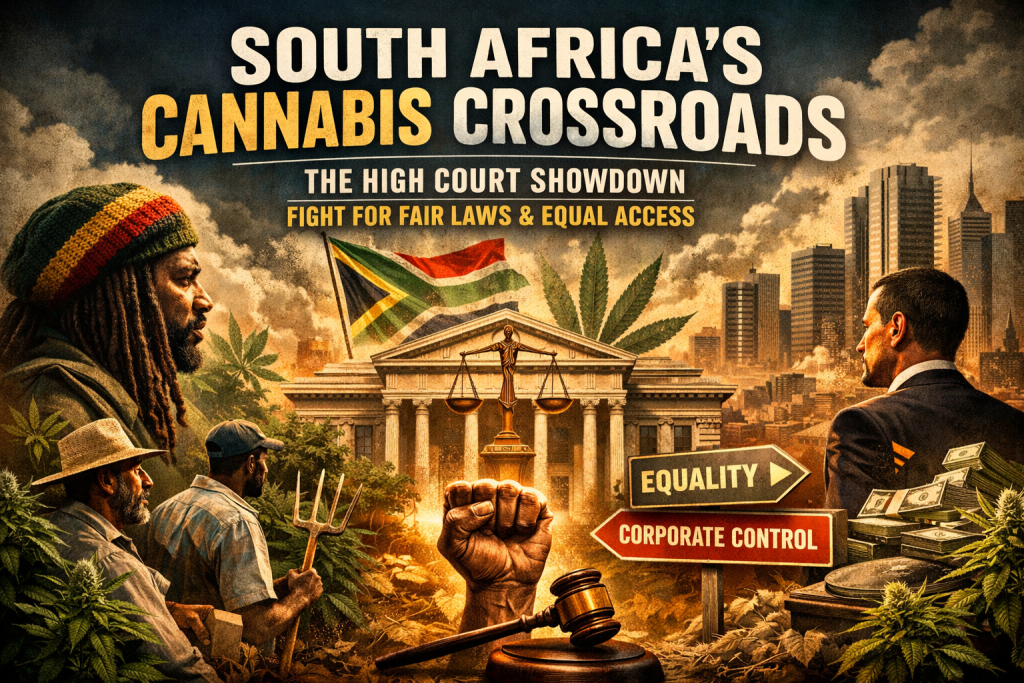
A High Court case, reported by IOL’s Weekend Argus, sees Rastafari representatives and small-scale farmers challenging what they believe are unfair and exclusionary cannabis regulations.
👉 Read the full original report here:
https://iol.co.za/weekend-argus/news/2026-04-13-high-court-showdown-rastafari-nation-and-small-scale-farmers-challenge-arbitrary-cannabis-laws/
This is not just another policy debate.
It’s a direct challenge to how cannabis has been structured since legalization.
What’s Actually Happening?
The case—currently being heard in the Western Cape High Court (April 2026)—focuses on a central argument:
👉 That current cannabis laws are “arbitrary” and unconstitutional in how they exclude:
- Traditional growers
- Informal farmers
- Rastafari communities
While cannabis was decriminalised for private use in 2018, the legal framework that followed has made it extremely difficult for these groups to:
- Grow commercially
- Trade legally
- Participate in the formal economy
The Core Problem: Legalisation Without Inclusion
South Africa technically “legalised” cannabis—but only partially.
The current system:
- Requires costly licensing structures
- Favours well-funded operations
- Limits participation for grassroots growers
- Fails to fully recognise cultural and religious use
So while the law changed…
access didn’t.
And that’s exactly what this case is challenging.
Why This Case Matters (Beyond the Headlines)
This is bigger than a courtroom battle.
It’s about who gets to benefit from the cannabis economy.
1. Economic Access for Small Growers
If successful, the case could open pathways for:
- Small-scale farmers to enter the legal market
- Local cultivation economies to grow
- More competitive pricing and supply
2. Recognition of Rastafari Rights
For the Rastafari community, cannabis is not just commercial—it’s spiritual.
This case pushes for:
- Legal recognition of religious use
- Protection of cultural practices
- Inclusion in national policy
3. A Shift in Industry Power
Right now, the system leans toward:
👉 Large, licensed, capital-heavy operators
This case challenges that—and could shift the balance toward:
👉 A more decentralised, community-driven industry
The Bigger Question: Who Owns Cannabis in South Africa?
Every country that legalises cannabis faces the same crossroads:
- Do you build an exclusive industry?
- Or an inclusive ecosystem?
South Africa is now being forced to answer that question.
Because if the people who built the culture are excluded…
👉 Then legalization becomes selective.
What This Means for the Future
Depending on the outcome, we could see:
If the challenge succeeds:
- Policy reform
- Broader licensing access
- Inclusion of traditional growers
- A more open cannabis economy
If the challenge fails:
- Continued pressure from advocacy groups
- More legal challenges
- Growing tension between policy and reality
Either way:
👉 Change is coming.
What This Means for the S420S Movement
At S420S, this hits close to home.
Because everything we’re building is rooted in one idea:
Cannabis should be accessible, authentic, and community-driven.
This moment reinforces a bigger vision:
- Supporting local ecosystems
- Respecting real cannabis culture
- Building a brand that reflects the streets, not just the system
Because the strongest brands don’t just sell products.
👉 They represent movements.
Final Thoughts
This High Court case is more than a legal headline.
It’s a test of:
- Fairness
- Inclusion
- And the future structure of the cannabis industry in South Africa
The outcome won’t just affect policy.
👉 It will shape the entire ecosystem for years to come.
Stay Connected
For more cannabis insights, culture, and updates:
