


News and Updates!
Dagga as Living Heritage: What Heritage Day Forgot to Mention
Heritage Day 2026 has just passed. On 24 September South Africans gathered under the official theme “Celebrating Our Living Heritage: Strengthening the Ties That Bind Us.” President Cyril Ramaphosa spoke in Oudtshoorn of heritage that lives in people — in the knowledge of traditional healers, the work of craftspeople, languages, rituals, ceremonies and the everyday practice of ubuntu. He called for indigenous knowledge to be recorded, taught, practised and passed on.
It was a strong and necessary message. Yet one of the country’s oldest, most widespread and still-contested living heritage practices received almost no official attention: the deep cultural, medicinal and spiritual relationship with dagga.
The omission is not accidental. It is the product of a century of prohibition that treated the plant as a foreign threat rather than a local inheritance. The result is that a practice rooted in indigenous languages, rural cultivation lineages, traditional healing and Rastafari sacrament still sits outside the formal heritage conversation — even as the Constitution now protects private adult use and cultivation.
The Word Itself Is Heritage
“Dagga” is not a slang import. It derives from a Khoikhoi (Khoekhoe) term — recorded in early colonial sources as dacha, dachab or similar — that referred to cannabis and, in some usages, to related aromatic plants such as Leonotis. The word was taken up by Dutch speakers at the Cape and became the everyday South African name for the plant across languages.
That linguistic root matters. It places dagga inside the country’s pre-colonial and early-colonial botanical vocabulary. Cannabis was already present and in use among Khoisan and various Bantu-speaking communities by the time European settlement began in 1652. Arab and Indian Ocean trade routes had carried the plant into eastern and southern Africa centuries earlier. Local communities developed their own relationships with it — medicinal, social, spiritual and agricultural.
To speak of living heritage while remaining silent about dagga is to leave a conspicuous gap in the story of indigenous knowledge systems.
Living Practices That Persist
Despite decades of criminalisation, the plant never left South African life.
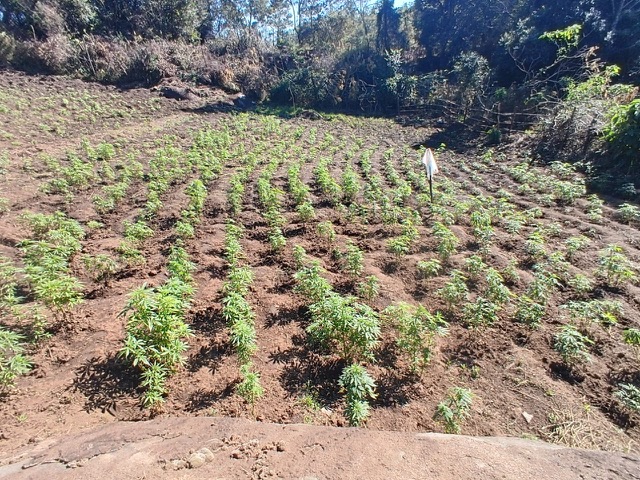
In rural areas, especially the Eastern Cape and parts of KwaZulu-Natal often called the “dagga belt,” families have maintained cultivation knowledge across generations. Landrace varieties adapted to local soils and climates carry both genetic and cultural information. Traditional healers have continued to use the plant in specific contexts. Rastafari communities hold it as sacrament. Ordinary people have grown and used it quietly for personal and household purposes.
These are not museum artefacts. They are living practices — exactly the kind of dynamic, people-carried heritage that the 2026 theme claims to honour. The difference is that this particular heritage carried a criminal record for most of the twentieth and early twenty-first centuries. That criminalisation did not erase the knowledge; it drove it underground, stigmatised its holders, and made open transmission risky.
When the Constitutional Court in 2018 protected private adult use and cultivation, it created a legal opening. It did not automatically restore cultural dignity or create institutional space for the knowledge systems that had survived prohibition. That work remains largely undone.
Heritage Recognition and Its Absences
South Africa has mechanisms for recognising living heritage and indigenous knowledge — Living Human Treasures programmes, indigenous knowledge systems policy, heritage inventories, and international instruments such as the UNESCO Convention for the Safeguarding of the Intangible Cultural Heritage. Cannabis-related knowledge and practice have rarely featured in these formal lists.
The reasons are layered: residual stigma, institutional caution, the lingering association of the plant with criminality, and the simple fact that communities long treated as offenders were not invited to define what counts as heritage. The result is a selective celebration of living heritage that is more comfortable with certain crafts, languages and rituals than with a plant that still makes officials uneasy.
This selectivity has costs. Knowledge that is not recorded, taught and valued in public institutions is more vulnerable to loss. Landrace genetics can disappear under pressure from commercial hybrids or eradication campaigns. Traditional cultivation techniques and medicinal applications can fade when younger generations see only risk and no recognition. Economic opportunities that should flow to custodian communities are more easily captured by better-resourced outsiders.
The Unfinished Legal and Cultural Project
The private-use right recognised in 2018 and partially codified in the Cannabis for Private Purposes Act is a necessary foundation. It is not sufficient. A right that exists mainly as the absence of criminal penalty for private conduct leaves the cultural and economic dimensions unresolved.
Genuine inclusion would require several parallel moves:
• Explicit recognition of traditional and cultural use within heritage and indigenous knowledge frameworks.
• Protection and documentation of landrace varieties and associated cultivation knowledge, with benefits flowing to the communities that maintained them.
• Practical pathways for small-scale and traditional producers to participate in any emerging legal economy without being locked out by capital and compliance barriers.
• Continued reduction of stigmatising enforcement against ordinary private conduct.
• Public education that treats dagga as part of South African history rather than solely as a policing problem.
None of these steps requires ignoring public-health considerations or the need to regulate commercial activity. They require honesty about the plant’s place in the country’s cultural landscape.
Heritage Day as Opportunity
Heritage Day and Heritage Month are annual invitations to decide what the nation is willing to see and value. The 2026 theme — living heritage that strengthens the ties that bind us — is expansive enough to include dagga if the political and institutional will exists.
Including it would not be an act of special pleading. It would be an act of consistency. If traditional healers, craftspeople, languages and rituals belong in the national story, then the knowledge systems that grew up around this plant belong there too. If we are serious about recording, teaching, practising and passing on indigenous knowledge, then the communities that kept dagga knowledge alive through prohibition deserve a place in that work.
The alternative is to continue a polite silence that leaves a significant part of living heritage in the shadows — acknowledged in private, policed in public, and missing from the official inventory of what makes South Africa itself.
Closing
Heritage is not only what we already feel comfortable celebrating. It is also what we have been taught to overlook, criminalise or feel ashamed of. Dagga sits in that uncomfortable category for many institutions. It does not have to remain there.
The plant has been part of this landscape and these communities longer than the laws that tried to erase it. The word itself is a heritage artefact. The cultivation knowledge, the medicinal applications, the spiritual uses and the quiet persistence of growers are living heritage by any honest definition.
Heritage Day 2026 asked the country to strengthen the ties that bind us. One of those ties grows in the soil, carries a Khoi name, and still waits for full recognition. The work of making that recognition real — cultural, legal and economic — is part of the unfinished business of both heritage and justice.
