

News and Updates!
South Africa’s Cannabis Crossroads in September 2026: Private Limits, Commercial Silence, and the Enforcement Reality
In early September 2026 a BusinessTech headline captured public attention: draft regulations under the Cannabis for Private Purposes Act could allow adults to possess up to 750 grams of cannabis — roughly 1,500 standard joints. The number is memorable. It is also only one piece of a much larger, still-unfinished picture.
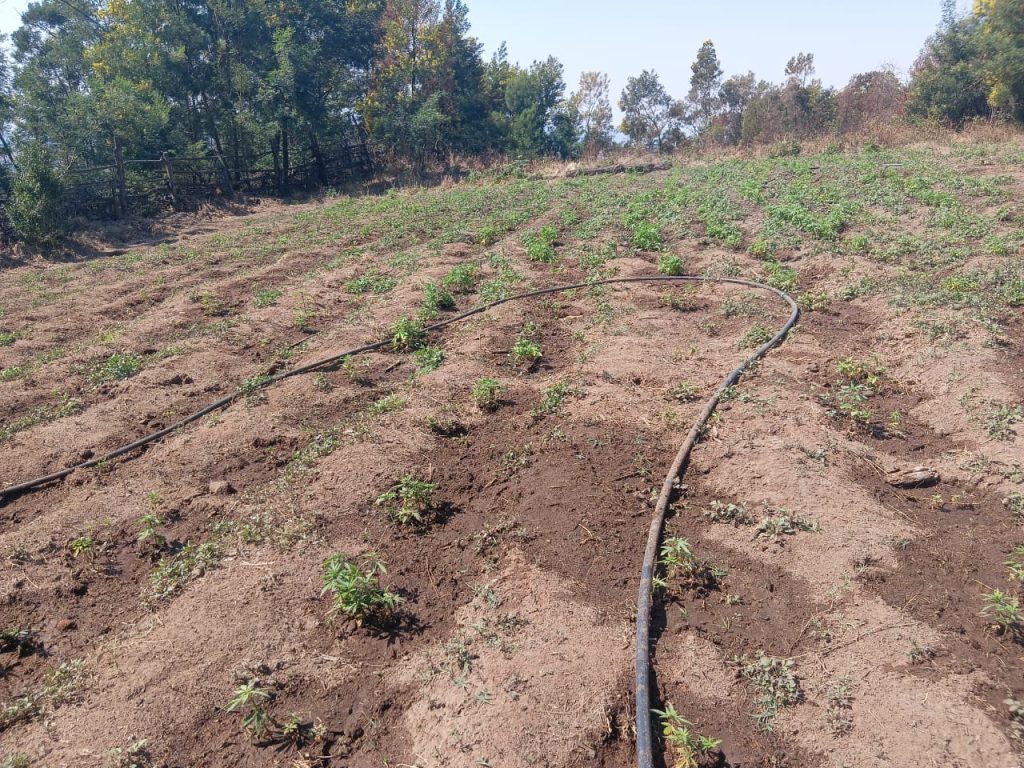
Eight years after the Constitutional Court protected private adult use and cultivation, South Africa continues to operate with a split reality. Private possession and home growing sit under a constitutional shield and an Act that is not yet fully operational. Commercial activity remains largely closed except for narrow medical and industrial-hemp channels. Enforcement actions continue. Delivery services and informal networks fill the gap. And an overarching commercial framework is still years away from Parliament.
This article examines the current state of play as of mid-September 2026: the draft private-use limits, the status of medical and hemp pathways, recent enforcement patterns, the economic stakes, and the persistent gap between rights on paper and accessible, inclusive formalisation.
The Private-Use Track: 750 Grams and Five Plants
The Cannabis for Private Purposes Act 7 of 2024 was signed in May 2024. It codifies the 2018 Prince judgment but requires regulations and a presidential proclamation before it is fully in force. In February 2026 the Department of Justice published draft regulations for public comment. Those drafts, still the operative public reference point in September, propose:
• Possession of up to 750 grams per adult per day (private or public place).
• Cultivation of a maximum of five plants at any time.
• Transport of up to 750 grams, subject to strict concealment rules.
• A formal process for expungement of certain historical convictions.
Legal commentators, including Paul-Michael Keichel, have noted that the numbers are relatively generous by international standards yet still leave important questions open: wet versus dry weight, treatment of concentrates and edibles, application in multi-adult households, and the practical enforceability of the five-plant ceiling. Until the regulations are finalised and the Act commenced, the legal baseline remains the Constitutional Court judgment plus whatever informal guidance police apply.
The Commercial Track: Narrow Lanes, High Barriers
Two regulated commercial channels currently exist.
Medicinal cannabis is licensed by SAHPRA under the Medicines Act. Cultivation, manufacturing and export are possible for holders of the appropriate section 22C licences. The number of active licences has grown into the low hundreds, but the process remains costly, technical and slow. Domestic patient access is limited.
Industrial hemp received a significant boost when the Plant Improvement Act framework raised the permissible THC threshold to 2 % (effective December 2025). This is one of the more permissive thresholds globally and opens space for fibre, seed, food and industrial applications. Permit numbers have increased, yet small and traditional growers still report difficulty navigating the system, accessing finance, and competing with better-resourced entrants.
Everything else — adult-use retail, private clubs that function as de-facto dispensaries, large-scale non-medical cultivation for the local market — remains outside a clear licensing pathway. The Department of Trade, Industry and Competition has spoken of a hemp and cannabis commercialisation policy and an overarching Cannabis Bill, with parliamentary introduction previously flagged for mid-2027. In the meantime the commercial adult-use market operates in a grey zone of private-club models, delivery platforms and informal supply.
Enforcement Continues Alongside Rights Language
While draft private-use limits are discussed in the media, police operations continue to generate headlines. Hydroponic laboratory busts, multi-kilogram seizures, and arrests for dealing remain regular features of provincial reporting. Cross-border interdictions and urban drug operations frequently include cannabis alongside other substances.
This dual reality — constitutional protection for private use combined with active enforcement against anything that looks commercial or excessive — creates uncertainty for growers, consumers and intermediaries. Community organisations continue to document cases in which the boundary between protected private activity and criminal exposure feels arbitrarily drawn.
Economic Stakes and Inclusion Gaps
Government documents have cited a domestic cannabis market potential in the billions of rand and have set growth targets for the broader hemp and cannabis sector. Global hemp demand is rising. South Africa’s landrace genetics and agricultural capacity are frequently described as strategic assets.
Yet the benefits of formalisation risk accruing mainly to those who can afford licences, compliance systems and patient capital. Traditional and small-scale growers — many of whom have cultivated the plant for generations — remain largely outside the legal channels. Record expungement processes exist on paper but are not automatic. The result is a familiar pattern: a regulated tier that is difficult to enter and a large informal tier that continues to supply most local demand.
Delivery Services and the Grey Market Response
In the absence of legal retail, app-style and same-day delivery services have proliferated in Johannesburg, Pretoria, Cape Town and Durban. Platforms offering sub-60-minute drop-offs, private-club membership models and discreet packaging have become a practical reality for urban consumers. These services solve real problems of convenience and reduced street risk. They also operate in the legal grey zone created by the missing commercial framework. Quality consistency, data privacy and long-term regulatory exposure remain live issues.
The Road Ahead
Several processes are running in parallel:
• Finalisation of the private-use regulations and commencement of the Cannabis for Private Purposes Act.
• Development of the commercialisation policy and the promised overarching Cannabis Bill.
• Continued operation of the SAHPRA medical channel and the expanded hemp permitting system.
• Ongoing litigation and advocacy (including challenges that question whether the current Act adequately protects and enables the rights recognised in 2018).
• Persistent enforcement activity that keeps the cost of informality visible.
Until these strands converge into a coherent, accessible system, South Africa will remain in a transitional state: private rights that are real but incompletely specified, commercial opportunity that is real but narrowly gated, and an informal market that continues to absorb the majority of activity.
The 750-gram figure makes for a striking headline. The deeper story is the distance still to be travelled between a constitutional judgment, an incomplete statute, draft numbers, and a living framework that ordinary South Africans — cultivators, consumers and small entrepreneurs — can actually use without fear or impossible compliance costs. That distance defines the cannabis policy agenda for the remainder of 2026 and beyond.